
Backtest chart traps — false comfort and false fear
A backtest chart triggers comfort or fear — but that feeling reacts to past data, not the future. A meta-cognition guide for the result screen.
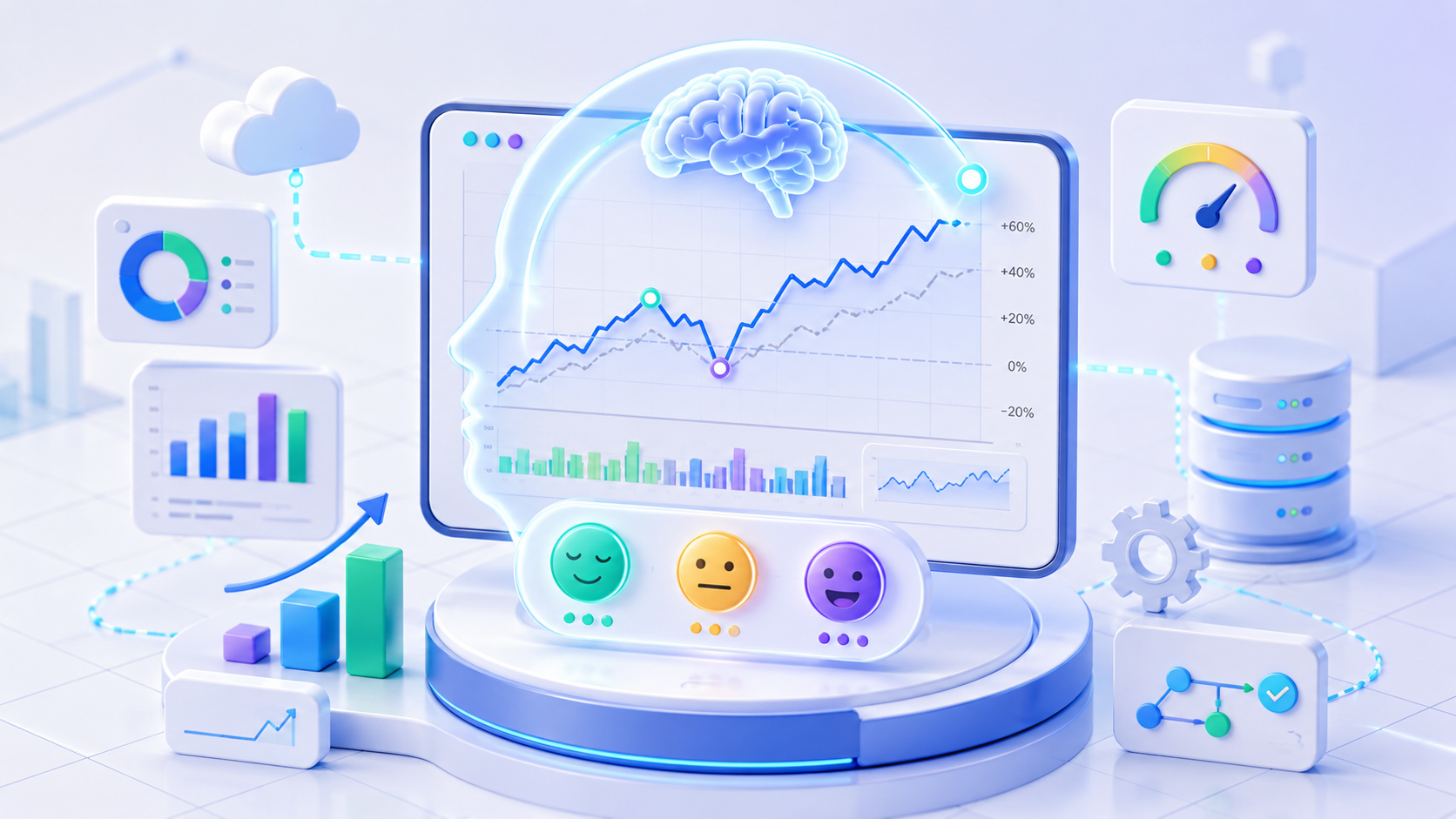
When a backtest result loads, a cumulative-return curve climbing to +200% triggers comfort. A -30% valley in the middle steals sleep. But where exactly does that emotion come from? Here's a walk through that.
Why a +200% chart feels comforting and a -30% curve costs sleep
The first time you see a backtest result, the reaction is similar across people. A cumulative-return curve climbing upward brings relief. A deep valley in the middle tightens the chest. Looking at the same result screen, running your asset through a different simulation can flip the feeling 180 degrees.
This is a natural reaction. The brain responds to visual information first. A green upward curve brings comfort before the number "+200%" registers. A red valley triggers fear before the text "-30%" lands. Before you read the numbers rationally, the picture has already set the emotion.
The problem is that the emotion has no connection to what's coming. You're looking at a visual representation of something that already happened, not a picture of how your asset will move next. Yet the emotion operates as if you've just glimpsed the future. Closing this gap is the starting point for using backtests accurately.
Where the emotion comes from — visual information shaping comfort and fear
The emotion you feel looking at a result screen actually gets built through two channels.
First, the picture arrives first. The shape, color, and slope of the chart reach your brain first. An upward curve reads instinctively as "good news." A sharp drop reads as "danger." Before consciously interpreting the numbers, the first emotion is already in place.
Second, absolute values follow. The number "+200%" deepens the comfort. The number "-30%" deepens the fear. Once those numbers convert into your actual portfolio size, the emotion intensifies again. -30% of $10,000 is $3,000. -30% of $100,000 is $30,000. Same backtest result, but the weight shifts with your portfolio size.
When the two channels combine, there's barely room for rational interpretation. From the moment you open the screen, emotion takes the seat first, and number interpretation trails behind. Knowing that going in creates room to observe your emotion one beat removed.
What backtest results show — and what they don't
Worth being clear about one thing. Backtests don't lie. Backtests do their job precisely. The boundary between what the tool shows and what it doesn't is what you need to know to read results honestly.
What backtests show is accurate.
- How a strategy you set behaved against past market data (accurate)
- The result difference between two methods on the same asset and period — for example, DCA vs lump sum (accurate)
- How volatility, MDD, and cumulative return distribute for your strategy (accurate)
What backtests don't show is also clearly empty.
- The result if you had picked a different start date (one year earlier or later can change the result significantly)
- Whether the future market will move like the past (unpredictable)
- Whether you could actually have lived through that period without selling during a -30% stretch (behavior isn't simulated)
- Real trading costs like fees, taxes, and slippage (small differences in execution price) (not in the model)
Confusing these two zones inflates or deflates the value of backtests. Concluding "this strategy can't lose" from an upward result overreads it. Concluding "this strategy is risky" from a drop overreads it equally. Both push the result's meaning further than it carries. Backtests are reference material. The starting point for decisions, not the endpoint.
Why "what happened" doesn't actually calm "what's coming"
This is the trickiest spot when reading backtest results. Looking at a +200% curve and feeling relief is, at its core, a fact check: "this kind of result existed in the past." But that emotion translates directly into expectation: "it will happen again." These are two different kinds of information.
- "+200% in the past" = hindsight information. A statistical summary of what already happened.
- "+200% in the future" = forward information. A prediction about what hasn't happened.
Backtests provide the first. The second isn't a question backtests can answer. But on the result screen, the emotion crosses automatically into the second zone — that's how the human brain works.
The fear from looking at a -30% valley has the same structure. The fact that one stretch dropped -30% in the past is factual. That it will drop -30% again is a separate estimate. Tying them together creates fear about something that hasn't happened.
Recognizing this gap makes the result screen look different. The meta-recognition "this data is past fact, the future is judged separately" sits as a layer underneath. With it, both comfort and fear can be observed one beat removed.

Why Kistack shows numbers next to charts
One thing got attention when building the result screen. Not showing only the chart — showing the numbers next to it.
- Cumulative-return curve + final value number alongside
- MDD indicator + maximum drawdown % alongside
- Yearly return cards + each year's % value
Why this way? A picture alone sets emotion first. Numbers alone read too abstract. Placing them together lets the number check the first visual emotion. "This valley looks deep, but it's exactly X% — and in my portfolio size, that's $Y." A small supplementary device for separating emotion from information on the result screen.
The device alone doesn't eliminate the emotion. The brain still responds to visual information first. But it helps create one beat of separation. Result interpretation is still yours to do. The role here is providing the materials for an honest interpretation.
The 30-second rule for result screens — observing your emotion one beat removed
One thing to try when the result screen loads. Within the first 30 seconds, write down the first emotion that came up. Whether it's comfort, fear, excitement, or disappointment. Doesn't matter. Just convert the first emotion into text.
Then go back through the result slowly. Cumulative-return %, MDD %, yearly distribution, absolute value. As you walk through the numbers one by one, a different picture starts to surface. "The upward curve felt good, but there was a -22% year in the middle." Or the reverse: "I was scared of the -30% valley, but it recovered over the next 2 years and ended at +180%."
Confirming the difference between the first emotion and the number information once makes the next viewing less reactive. That's where meta-cognition begins. Noticing the pattern of how you generate emotion makes the next result readable one beat removed.
Looking at it directly
The fastest way is running the same asset with two different start dates. Once at a start date that produces a good result, once at one that produces a poor result. With both result screens side by side, you can see directly how the start date alone shifts your emotion. Same asset, but a single start-date difference completely changes the visual.
The comfort and fear on the result screen are really "start-date luck." Run good and poor start dates twice. From there on, the result screen reads differently.
Backtest numbers are starting points, not conclusions. Real accounts have fees, taxes, and slippage left out.
- This information is not investment advice.
- Past performance does not guarantee future results.
- Backtest results are simulations and may differ from actual trading outcomes.
Kistack is an information service designed to help users review market data independently and form their own judgments. These backtests are historical simulations based on public market data and do not guarantee future investment returns. Past performance is not indicative of future results. Trading costs such as fees, taxes, and slippage are not reflected in simulations. Data is provided by Kistack; decisions are made by users.
This information is provided for educational and informational purposes only and does not constitute investment advice within the meaning of the Investment Advisers Act of 1940 (IAA) §206. Kistack is not a registered investment adviser and does not provide individualized buy or sell recommendations.
All performance figures shown are historical simulations. Disclosures regarding past performance and risk are presented in a manner intended to be fair, balanced, and not misleading, consistent with FINRA Communications Rule 2210. No statement on this site is intended to omit material facts or to mislead readers under SEC Rule 10b-5 of the Securities Exchange Act of 1934.