
When a Company Buys Back Its Own Stock, Is That Good for Shareholders?
Companies spent record sums in 2026 buying back their own shares. What does a buyback mean for shareholders, how is it different from a dividend, and why isn't it always good news? Here's the whole picture in plain terms.
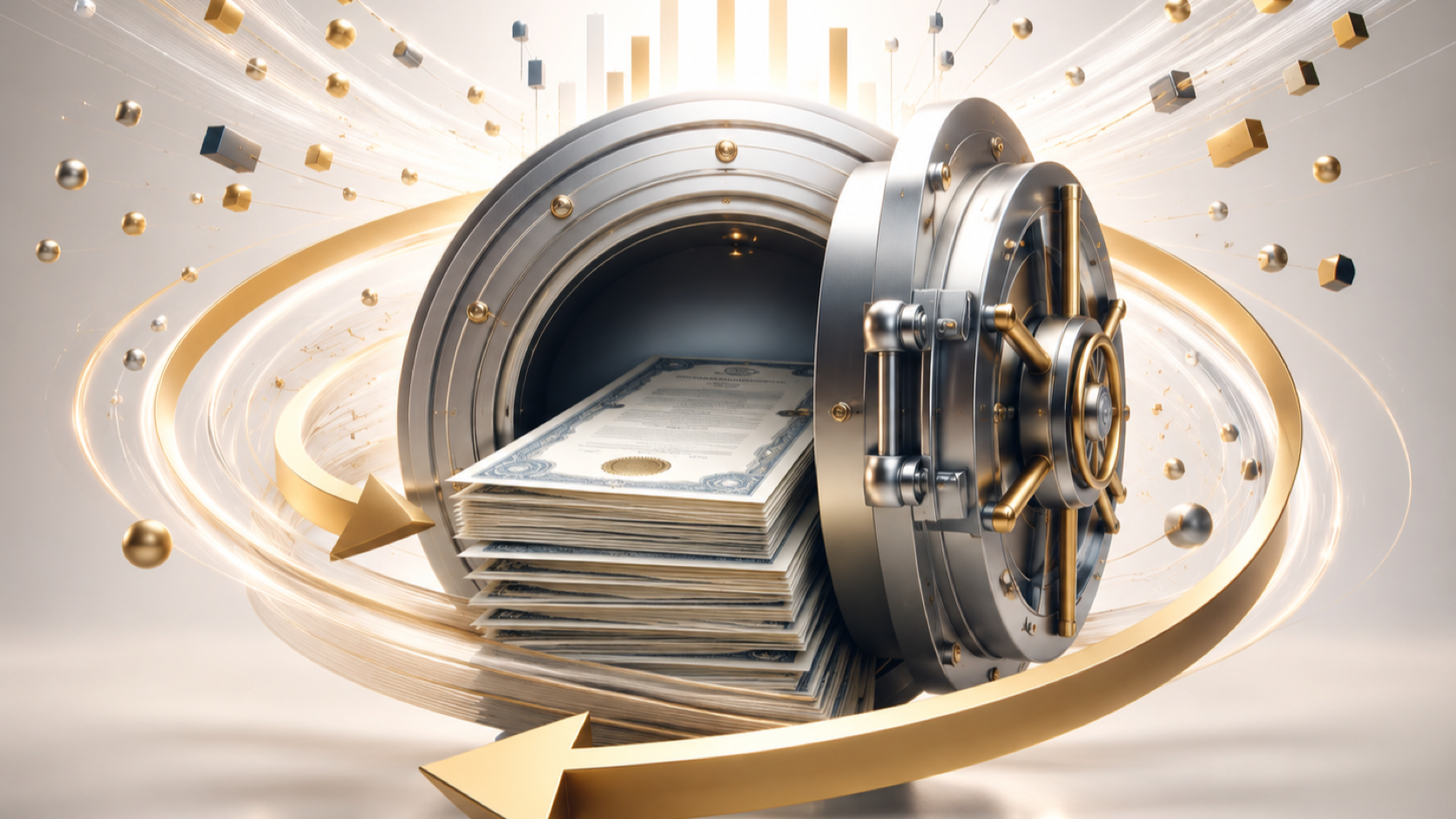
When a company uses its earnings to buy its own shares back off the market, that's called a share buyback. In 2026, buybacks by large US companies surged to record levels. Just the amount announced over the first four months reached $665 billion — a stronger start to a year than ever before. Some companies rolled out buyback plans of $100 billion at once. But is a company buying its own stock actually good for shareholders? If it's good, why — and why isn't it always good? Let's walk through it.
What a buyback is, first
Start by unpacking what a buyback is. When a company earns money from its business, it spends that money in several places. It builds new factories, pays down debt, or hands money to shareholders as dividends. One of those options is using company cash to buy back its own shares that trade on the market. That's a buyback.
The shares it buys are usually retired or set aside, which reduces the number of shares trading in the market. It's like fewer people sharing the same loaf of bread. As the number of people eating shrinks, each person's portion grows — and as the share count shrinks, each remaining share's portion grows.
The key is that the company decided, "we'll spend our money here, buying our own stock." It's a way of turning the company's cash toward shareholders.
Why it's called good for shareholders
There are two reasons a buyback is considered good for shareholders.
First, each share's portion grows. If the company's earnings stay the same while the share count falls, the profit each share lays claim to rises. That's called earnings per share, and a buyback has the effect of lifting it — which also feeds straight into how the P/E multiple gets read. Same company, but each share is worth a bit more.
Second, it becomes a force supporting the stock price. When a company steadily buys its own shares, it creates that much demand in the market. In fact, there's a view that in the 2026 market this large-scale buying acted as a floor, keeping prices from falling far. A company buying its own stock can also read as a signal that "we think the price is worth it right now."
For these reasons, buybacks are counted alongside dividends as a leading way a company returns value to shareholders.
How is it different from a dividend?
This is easy to confuse with a dividend. Both return value to shareholders, but the method differs.
A dividend hands earned money directly to shareholders as cash. From the shareholder's side, you see money land in your account. But tax often follows at the moment you receive it.
A buyback, instead of handing over cash, shrinks the share count to grow the value of the remaining shares. No cash arrives right now, but the portion your shares represent gets bigger. It also works differently in that it can defer tax until the point you sell. Compared with the compounding effect of reinvesting dividends — taking cash directly and putting it back to work — the contrast between the two grows clearer.
It's hard to declare which is simply better. A dividend may suit a shareholder who wants cash in hand right away; a buyback may suit one who wants share value to build. Companies often use a mix of both.
It isn't always good news
Here you have to keep your balance. A buyback isn't automatically a good signal.
First, the company might have been better off spending that money elsewhere. The cash spent on a buyback could have gone into new business lines or research and development. If it buys shares instead of funding growth, it risks weakening the company's growth engine over the long run.
Also, higher earnings per share doesn't mean the company actually earned more. The profit earned stays the same; only the share count it's divided by fell, so the per-share number just looks better. The surface metric improved, but the company's underlying strength may not have.
Timing is part of it too. If a company buys its own shares at expensive prices, it's spending shareholder money inefficiently. So a buyback can't be judged good or bad just by the fact that it happened — you have to look at what situation it's done in, and with what money.
So how should you look at it?
When you hear buyback news, instead of taking it as "shareholder returns, so automatically good," it widens your view to look at a few things together.
Could the company have spent that money better on growth? Is the stock price not at an uncomfortable level? And is this a one-off or a steady policy? The same buyback means something entirely different when a solid company does it steadily with spare cash versus when a company that's run out of growth does it to dress up a metric.
In a period like 2026, when buybacks surged across the whole market, that can be a force supporting prices and, at the same time, a signal that companies are struggling to find places to invest for growth. One phenomenon can be read from several angles. Don't just look at the size of the number — look at the context behind it.
The bottom line
A buyback is a company buying its own shares back off the market to shrink the share count. Fewer shares means each share's portion grows and a force supporting the price appears, so it's counted alongside dividends as a way to return value to shareholders. But it isn't always good. It may be money that should have funded growth, it may be dressing up a metric, or it may have been bought at expensive prices. So don't file "buyback equals good news" automatically — look at which company is doing it, with what money, in what situation. The same buyback means entirely different things depending on the context.
- This information is not investment advice.
- Past performance does not guarantee future results.
- Backtest results are simulations and may differ from actual trading outcomes.
Kistack is an information service designed to help users review market data independently and form their own judgments. These backtests are historical simulations based on public market data and do not guarantee future investment returns. Past performance is not indicative of future results. Trading costs such as fees, taxes, and slippage are not reflected in simulations. Data is provided by Kistack; decisions are made by users.
This information is provided for educational and informational purposes only and does not constitute investment advice within the meaning of the Investment Advisers Act of 1940 (IAA) §206. Kistack is not a registered investment adviser and does not provide individualized buy or sell recommendations.
All performance figures shown are historical simulations. Disclosures regarding past performance and risk are presented in a manner intended to be fair, balanced, and not misleading, consistent with FINRA Communications Rule 2210. No statement on this site is intended to omit material facts or to mislead readers under SEC Rule 10b-5 of the Securities Exchange Act of 1934.